

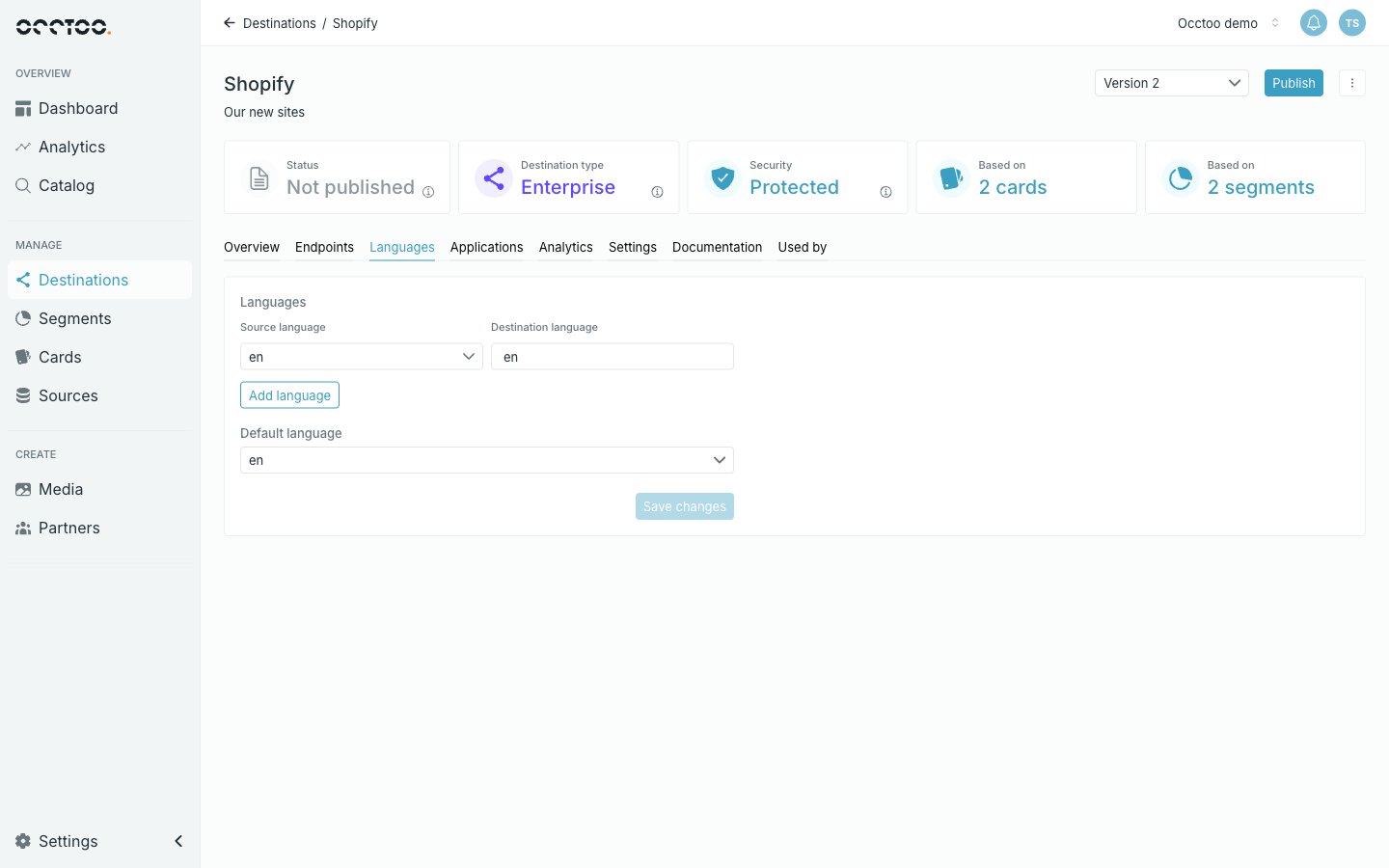
- Source language — a language key that exists in your onboarded data. The selector lists the keys Occtoo has seen.
- Destination language — the code callers use, for example in
&language=no.
sv-SE can be served as sv.
Add or remove a language
Use Add language for a new row, and the bin icon to drop one. Then pick the Default language — the language served when a request does not ask for one — and click Save changes. Keys and values must be 2–10 characters, may contain only letters, digits,_ and -, and must each be unique within the version. The Default language selector only offers rows that are completely and validly filled in, and follows along if you delete the row it was pointing at.
Add every language you intend to query before publishing. A localized property can only be requested for a language the destination carries; asking for one it does not know returns the default language instead of an error.